Mylar Haunted House: A Designer’s Review
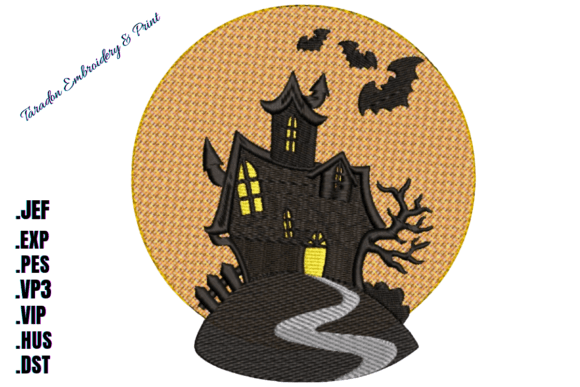
As an embroidery designer who has spent years helping small businesses translate their brand identity into thread, I am always on the lookout for digital embroidery files that offer more than just aesthetic appeal. They need to be functional, durable, and commercially viable. Recently, I had the opportunity to review Mylar Haunted House, a design that immediately caught my eye for its potential in seasonal merchandise and branded patch use. This eerie mylar machine embroidery design features a haunted house, its intricate details shimmering with a ghostly iridescence thanks to the use of mylar. Against the backdrop of a blood-red mylar m, the visual impact is undeniable. But does it hold up under the scrutiny of professional production? Let’s dive into how this piece performs for shop owners, apparel decorators, and handmade brands.
First Impressions and Visual Personality
The first thing you notice about Mylar Haunted House is its bold, decorative nature. It is not subtle. The use of mylar creates a high-contrast, reflective surface that demands attention. For a Halloween-themed product, this is exactly what you want. However, from a branding perspective, the design leans heavily into the playful yet spooky category. It feels handmade and premium simultaneously, provided the execution is precise. The iridescence adds a layer of depth that standard thread colors simply cannot achieve, making it an excellent choice for businesses looking to elevate their seasonal offerings beyond basic printed graphics.
For boutique owners and Etsy sellers, this design offers a unique selling point. It is not just another pumpkin or ghost; it is a textured, shimmering statement piece. When considering this for your product line, think about how the "ghostly iridescence" aligns with your brand voice. If your brand is rustic or minimalist, this might be too bold. But if your brand is whimsical, modern, or focused on high-impact visual storytelling, Mylar Haunted House fits perfectly.
Real-World Applications for Small Business Merch
The true test of any machine embroidery design is its versatility across different substrates. Here is how I see Mylar Haunted House performing in real commercial embroidery scenarios:
- Embroidered Patches: This is arguably the best application. The mylar background provides a sturdy, flat base for the haunted house details. Patches are low-risk for small businesses because they can be produced in batches and applied to various items later. They serve as excellent collectible items for customers.
- Tote Bag Design: Canvas tote bags are a staple for craft fairs and boutique giveaways. The reflective quality of the mylar stands out beautifully against natural cotton or dark denim fabrics. It turns a simple bag into a standout accessory.
- Cap Embroidery: Using this on the front panel of a structured cap can create a striking look. However, curvature is a challenge. The design needs to be scaled correctly to avoid distortion on the curved surface of the cap.
- Apron Embroidery: For bakeries, florists, or creative studios hosting Halloween events, an apron with this design adds a festive touch to staff uniforms. It signals attention to detail and enhances the customer experience.
- Custom Apparel Accents: Instead of a full chest logo, consider using a smaller version as a sleeve detail or pocket accent on work shirts. This subtle placement can increase perceived value without overwhelming the garment.
Technical Considerations and Production Challenges
While the visual appeal is high, working with mylar requires technical precision. As a designer, I must advise caution in several areas. First, stitch density is critical. Mylar can tear if the needle penetrates the same spot too many times or if the tension is too high. You must ensure that the digitizing of the file accounts for the fragility of the material.
Second, consider the fabric texture. Mylar works best on smooth, stable fabrics. Trying to embroider this on highly textured fleece or loose-knit sweaters may result in puckering or misalignment. Always use a appropriate stabilizer—I recommend a heavy-cut back stabilizer for patches and a tear-away for lighter garments, depending on the final use.
Another key factor is size. The intricate details of the haunted house may get lost if the design is scaled down too much. For small patch sizes or tiny lettering applications, the shimmering effect might blur into a solid mass of color. I strongly suggest creating a printable mockup at actual size to verify legibility before running a production batch.
Impact on Brand Identity and Customer Trust
Incorporating Mylar Haunted House into your product line does more than just sell a item; it reinforces your brand identity. High-quality embroidered merchandise signals professionalism and care. When customers see the shimmering detail and feel the texture, it builds trust. It shows that you are not just slapping a logo on a cheap blank, but investing in quality design assets.
For handmade brands, this design can serve as a signature element. Imagine a local coffee shop offering a limited-edition tote bag with this design during October. It becomes a conversation starter, driving social media engagement and foot traffic. The uniqueness of the mylar finish makes the finished product feel exclusive, which can justify a higher price point compared to standard screen-printed items.
Practical Designer Notes for Implementation
Before you purchase the digital embroidery file and start production, follow these steps to ensure success:
- Test in Black and White: Before committing to colorful threads, stitch out the design in black and white to check the structural integrity and spacing. This helps identify any potential jump stitches or dense areas that might cause issues.
- Check Thread Color Contrast: Since the background is mylar, ensure your thread colors contrast well. Dark threads may disappear against the blood-red mylar backdrop, while light or metallic threads will pop.
- Confirm Hoop Size: Verify that the design fits within your machine’s hoop size. If you are doing large-scale production, ensure your hoop setup allows for efficient loading and unloading.
- Review Commercial Licensing: Always confirm the license terms included with the file. Ensure you have the right to use Mylar Haunted House for commercial purposes, especially if you are selling the finished products online or in retail stores.
- Create Client Mockups: If you are designing for a client, present them with a realistic mockup showing how the mylar reflects light. This manages expectations and helps them visualize the final product.
In conclusion, Mylar Haunted House is a powerful tool for small business owners looking to add a touch of spooky elegance to their merchandise. It requires careful handling and technical knowledge, but the payoff in visual impact and perceived value is significant. Whether you are creating embroidered patches for a local festival or custom apparel for your boutique, this design offers a unique way to stand out in a crowded market. Just remember to test thoroughly, respect the material limitations, and let the shimmering details do the talking.